Boat Dealer Websites for the Whole Dealership.
New models by builder and range, pre-owned and brokerage boats, financing, a service desk, your boat shows and a parts shop — one site, one domain, and every request landing in one admin. We build it around the departments you actually run.
- No build cost
- Live in under 30 days
- No minimum term
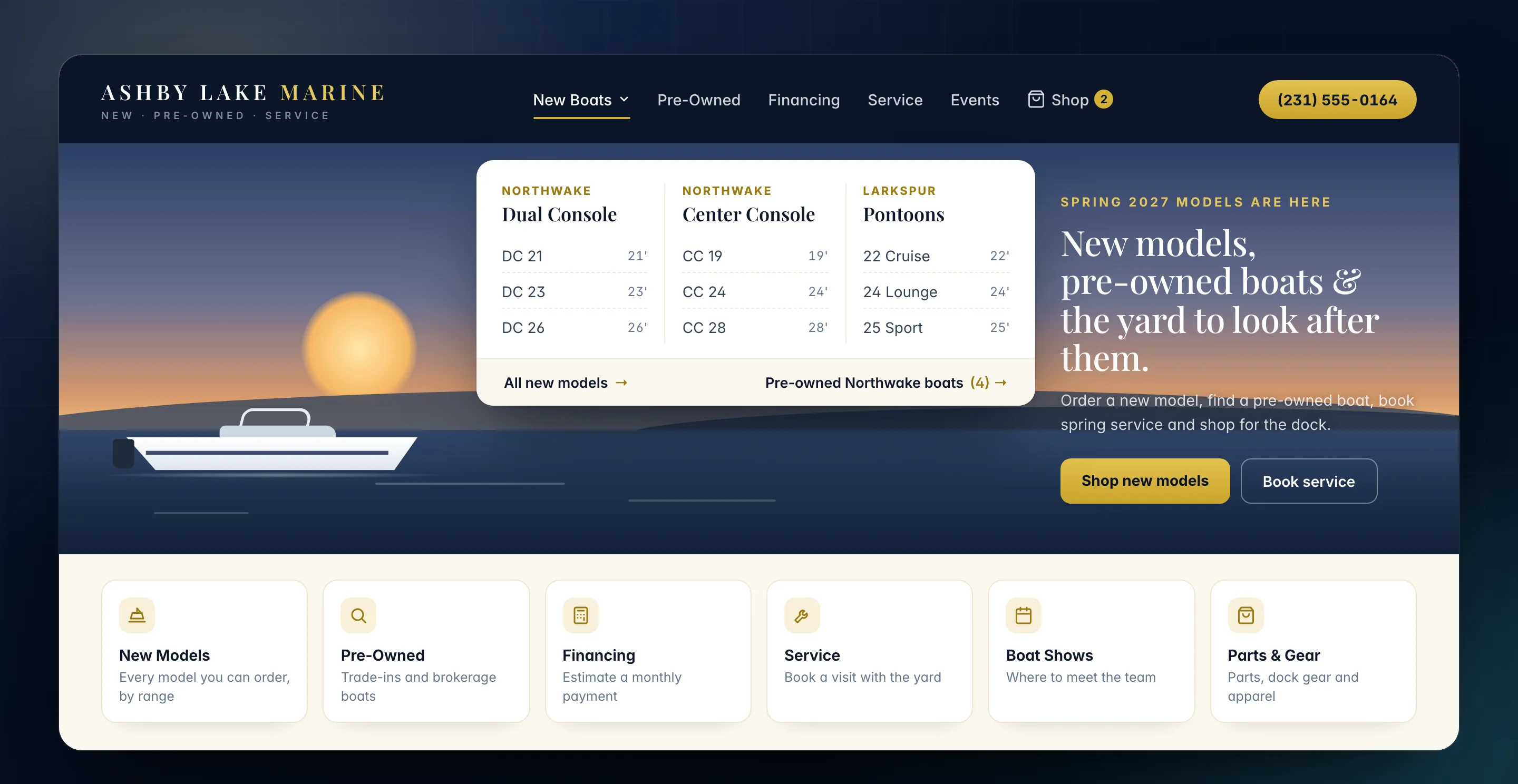
A dealership is not a brokerage with a bigger inventory.
A buyer comes for a new model and leaves with a trade-in quote, a lender and a spring service date. Each of those is its own page on your site.
/new-boatsNew models
A page for each builder you represent, with its ranges and every model you can order. Models can be kept in your admin like a listing, and the New Boats menu is built from the same list.
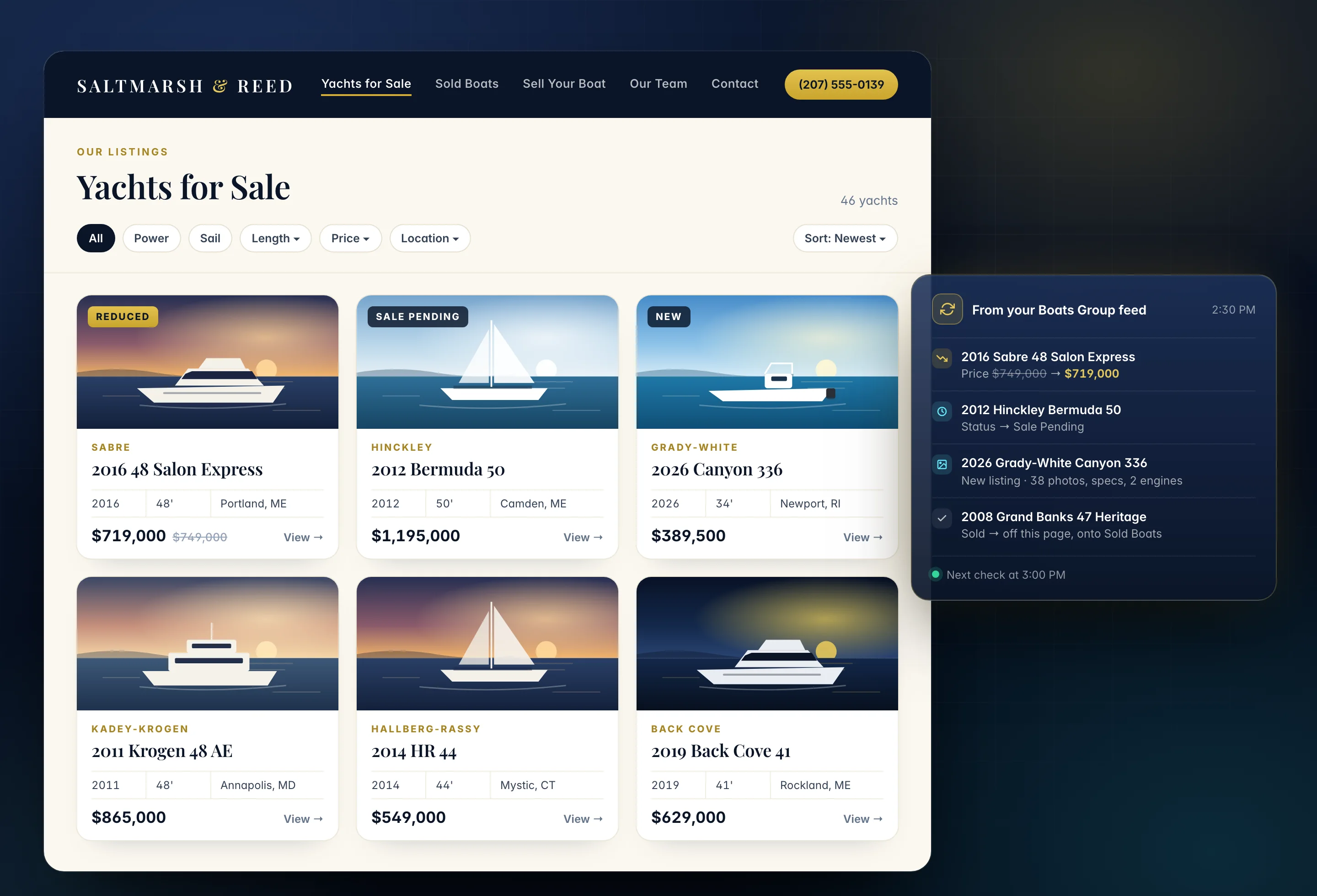
/yachts-for-salePre-owned & brokerage
Trade-ins and brokerage boats from your Boats Group feed or your admin. Each brand page links to the pre-owned boats of the same make.
/financingFinancing
Your lenders, their application links, and a payment calculator — price, down payment, rate and term in, an estimated monthly payment out.
/serviceService
A booking request that asks what your service writer needs, and lands in your admin as a lead instead of in a shared inbox.
/eventsBoat shows & events
Shows, open houses and demo days, read from your news posts: tag a post as an event and it appears, dated.
/shopParts & gear shop
Parts, dock gear and apparel from your Shopify store, on your own domain, with a cart and Shopify's checkout.
- Section 179 page with an enquiry form
- Insurance referral page
- Parts request form
- Indoor storage page
- Trade-in form
What marine dealers told their trade association
- More than half
of participants in MRAA's 2025 Digital Marketing Survey named Dealer Spike as the website provider they currently use.
- Time & staffing
was the most-mentioned digital-marketing pain point in the same survey (13.4% of mentions), ahead of cost and budget.
- “Payment-focused”
A dealer in MRAA's July 2026 Pulse: “Customers are much more payment-focused, rather than price focused.”
Sources: MRAA Marine Industry Digital Marketing Report, 2025 (more than 206 marine businesses); MRAA, “What Dealers Are Saying About Clearance, Inventory and MY2027”, Aug 6, 2026. That is why we do the building, and why financing gets a calculator.
A service request that arrives as a work order, not a voicemail.
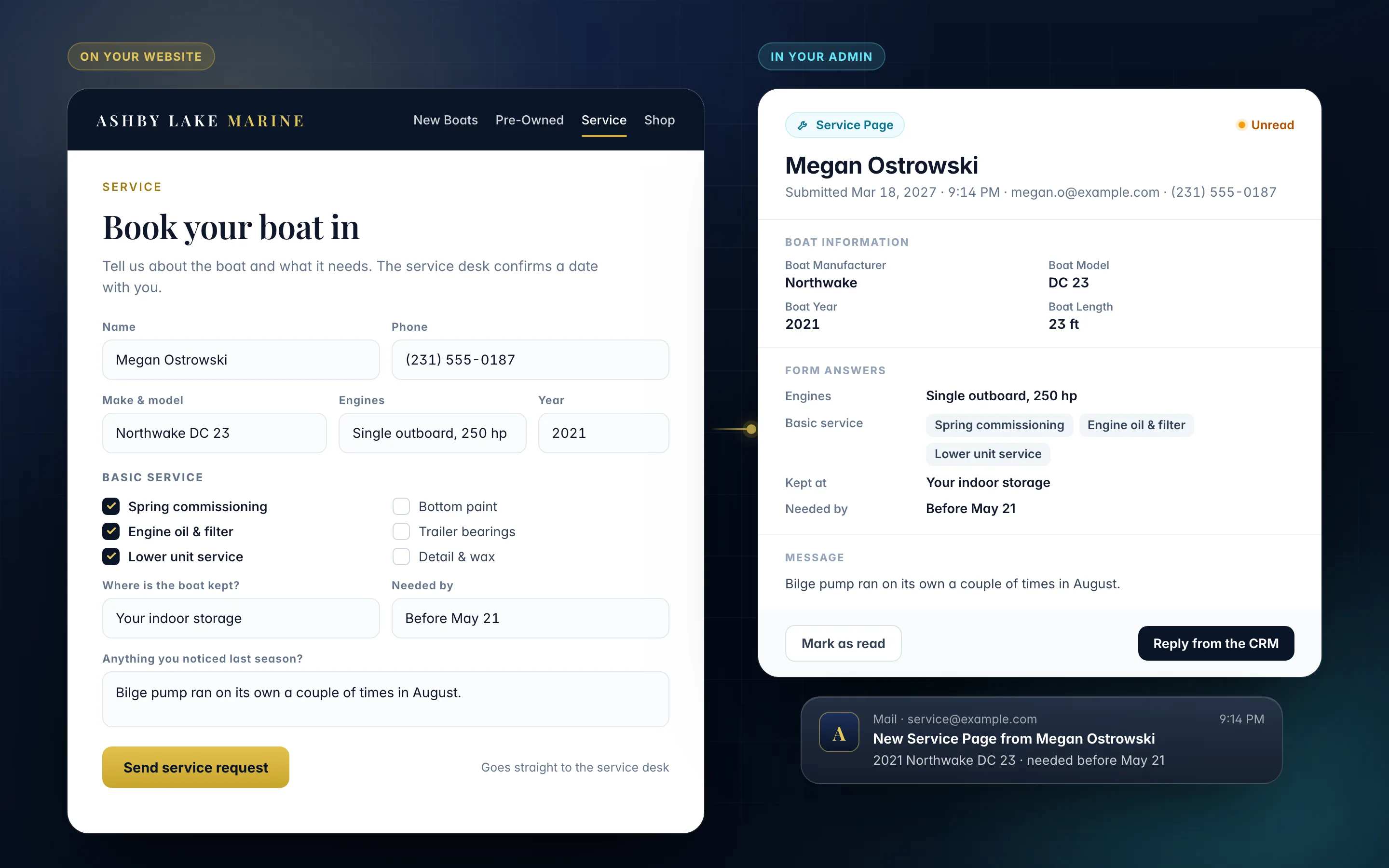
A contact and a lead, not an email to forward
The request creates the contact and sits in your admin beside every sales enquiry, labelled Service Page.
The boat in its own fields
Make, model, year and length land as boat details; engines, the checklist, where the boat is kept and the deadline land as answers you can filter and export.
An email to the dealership
“New Service Page from …” goes to the address you choose, the moment the form is sent.
Spam protection that never loses a booking
If the spam check itself fails, the request still goes through.
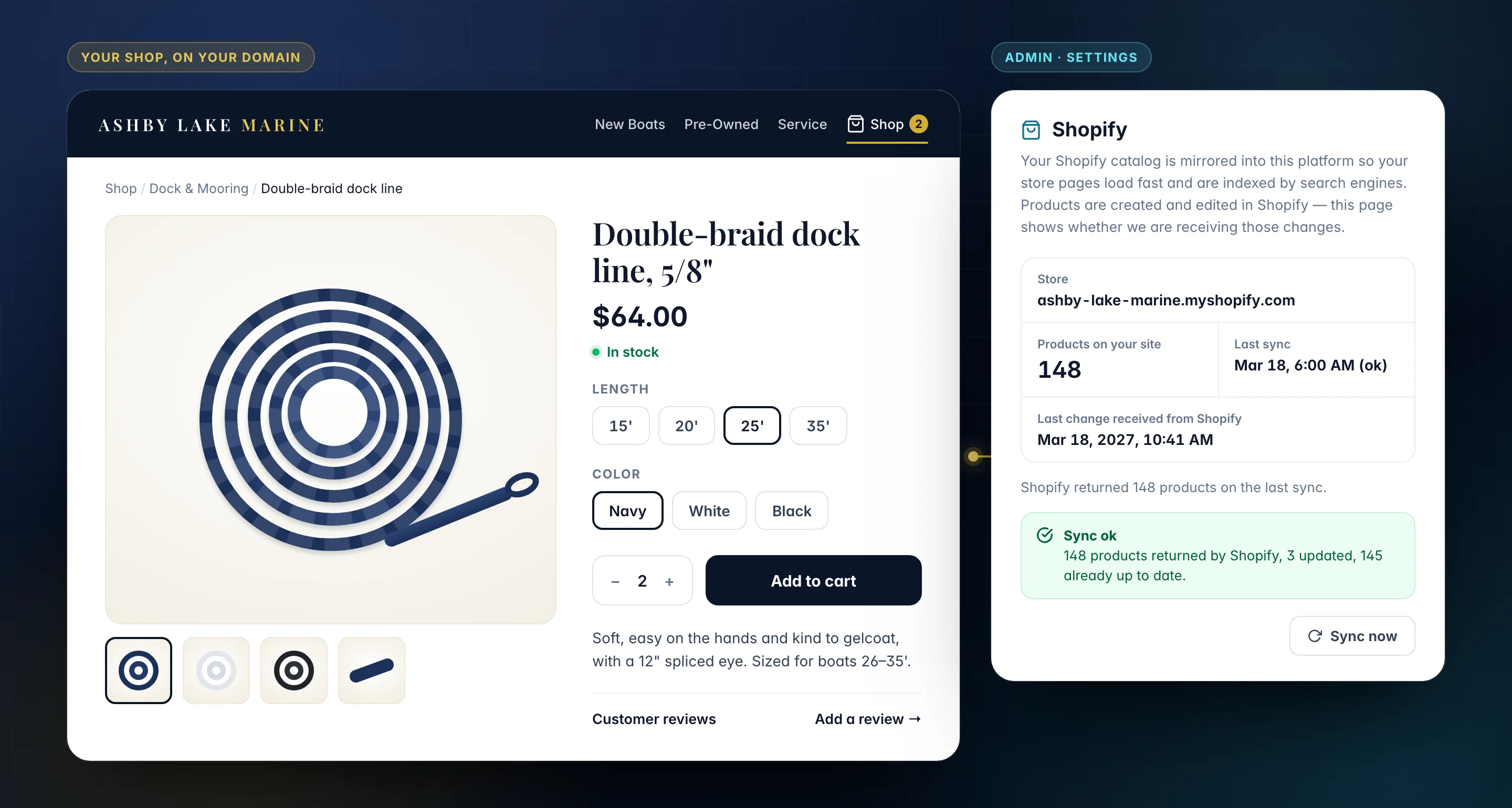
Keep Shopify. Sell on your own site.
Your Shopify catalog is mirrored onto your dealer site, so the shop is on your domain, loads fast and can be indexed by search engines — and a customer buying dock lines is one click from your new models.
- Products are created and edited in Shopify, as now
- Shopify changes picked up automatically, with a daily sync behind them
- Price and stock are re-checked with Shopify before anything goes in the cart
- Checkout is Shopify's, so payments and orders stay in Shopify
- Product reviews appear only once you approve them
In your admin, a Shopify card shows how many products are on your site, when the last sync ran and when the last change arrived from Shopify.
A website and a CRM. Not a DMS.
It does not replace Lightspeed, DockMaster or whatever runs your parts counter and service bays, and it does not connect to them. Here is the split.
Your YachtOne site
- Shows new models, pre-owned and brokerage boats
- Takes service, parts, trade-in and sales requests
- Sells catalog items through your Shopify store
- Estimates a monthly payment
- Lists your boat shows and events
Stays in your DMS
- Parts inventory and the parts counter
- Work orders, technician time and invoicing
- Floorplan, deals and F&I paperwork
- Credit applications and lending decisions
- Accounting
Everything Else You Might Ask.
What should a boat dealer website have?
A page for every department a customer deals with, not just a search page. New models by builder and range. Pre-owned and brokerage boats. Financing, with a way to estimate a monthly payment. A service booking form. The boat shows and events you will be at. And, if you sell them, parts and gear.
We build each of those as its own page on one site, under your domain, so a buyer who came for a new model can find the trade-ins, the lender and the service desk without leaving.
Can new models and used boats from the same builder sit side by side?
Yes. Each builder you represent gets a page with its ranges and the models you can order, and that page links to the pre-owned boats of the same make in your inventory.
New models can be kept in your admin like any other listing, so adding a model, dropping one or moving it to a different range changes the New Boats menu and the brand page with no developer involved.
Where does our inventory come from?
Pre-owned and brokerage boats come from your Boats Group feed, or are kept in our admin if you would rather enter them there. New models are kept in the admin.
There is no direct connection to a dealer management system such as Lightspeed or DockMaster. Your DMS stays where parts, work orders and accounting live; the website shows the boats.
Can we sell parts, dock gear and apparel on the site?
Yes, from a Shopify store. You keep creating and editing products in Shopify. We mirror the catalog onto your site, so the shop pages are on your own domain, load fast and can be found by search engines, and customers add to a cart there before paying through Shopify's checkout.
Changes you make in Shopify are picked up automatically, with a daily sync as a safety net. When a customer adds something to the cart, the price and stock are checked with Shopify again first, so an item Shopify shows as sold out is not added.
Does the service form book a date in our calendar?
No. It is a request, not a booking. The owner tells you the boat, the engines, the work they want, where the boat is kept and when they need it by. That lands in your admin as a lead, with an email to the dealership, and your service desk calls back to confirm a date.
The questions are yours. If your service writer works from a particular checklist, the form asks it in that order.
Can buyers work out a monthly payment?
Your financing page can carry a payment calculator: boat price, down payment, interest rate and term in, an estimated monthly payment out. Next to it go the lenders you work with and their application links.
The calculator is an estimate. The site does not take credit applications or make lending decisions; the lender does.
How do boat shows and open houses get onto the site?
We set your events page up to read from your news posts. Write a post about the show, tag it as an event, and it appears on the events page with its date — no developer, no separate calendar to keep.
How much does a boat dealer website cost?
The Website plan is $350 a month and the Website + CRM plan, which adds the contacts CRM that service and sales requests land in, is $500 a month. There is no build fee: your first month covers the build, and sites go live in under 30 days.
A dealer site is rarely a standard set of pages, so tell us which departments you need — a Shopify store, brand pages, a service form — and we will quote exactly that. There is no minimum term.
We already have a dealer website. Can we move without losing our Google rankings?
Yes. We map every old page to its new address and redirect it, so the links and ranking history you have built follow you across. Your domain stays yours, and your email carries on as it is.
More problems we solve
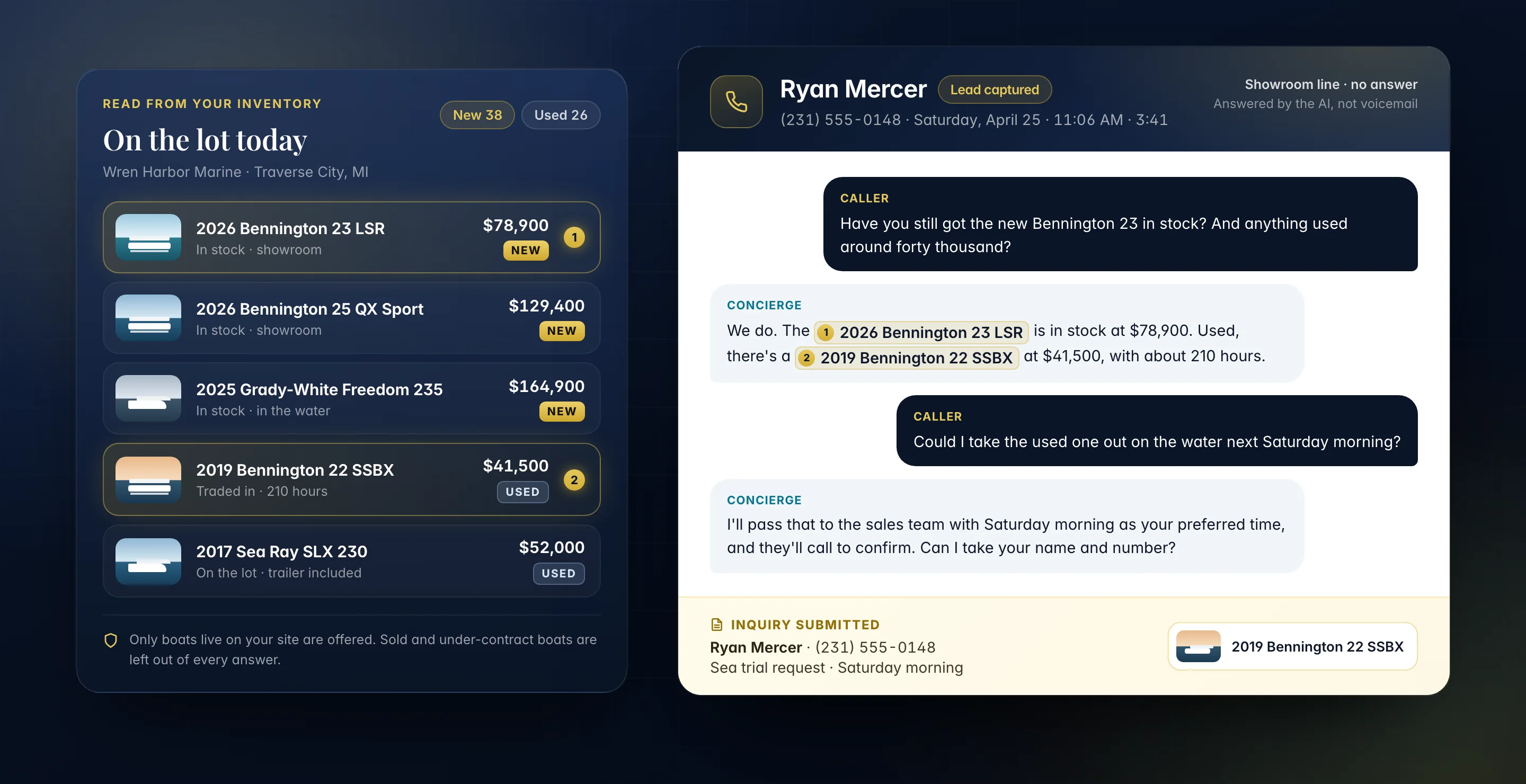
Welcome to the First End-to-End Yacht Sales Operating System
We've built the only platform designed specifically for how yacht sales actually happen. From the moment a visitor lands on your site—they never leave your ecosystem.